What AI training platforms actually cost a South African contact centre
Almost nobody explains the full cost picture. This page covers the five categories that make up real total cost of ownership — and what to ask any vendor before you commit.
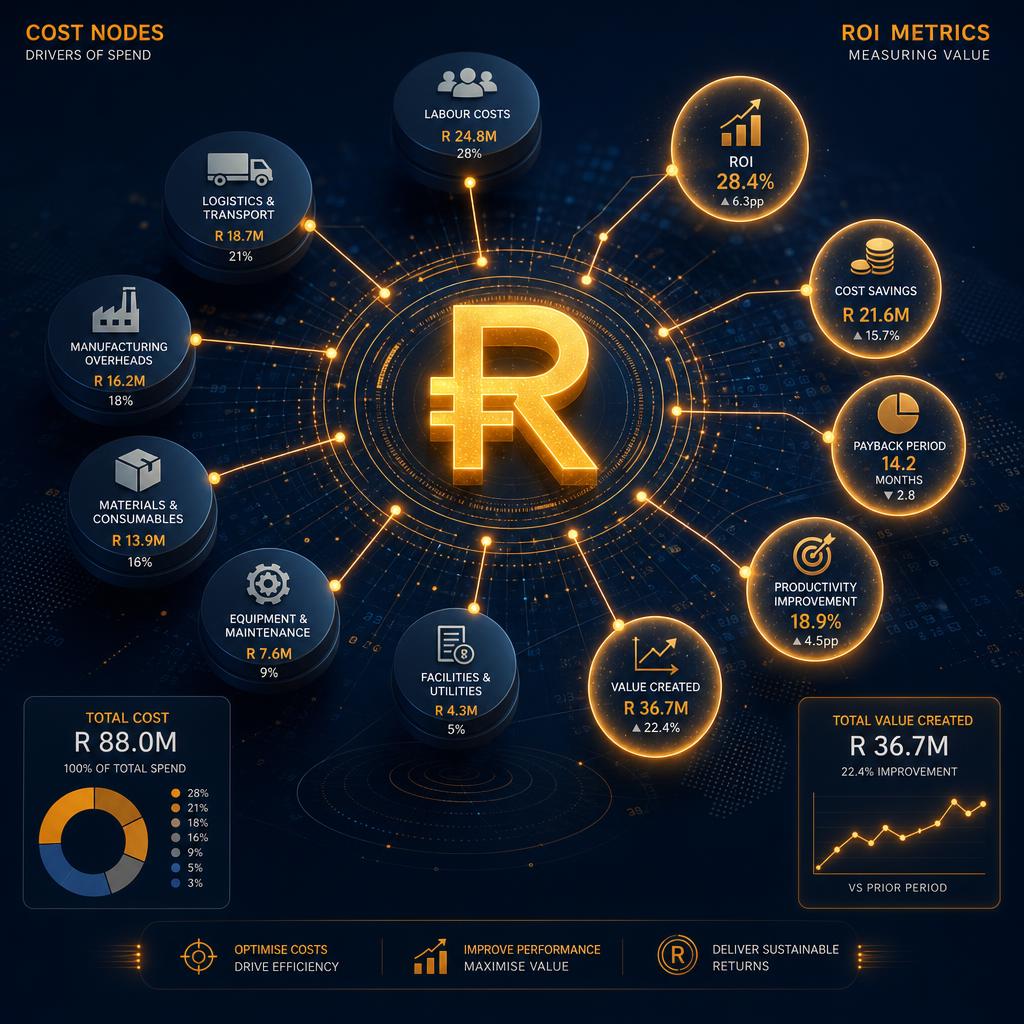
The short answer
AI training platforms for SA contact centres have five distinct cost categories — licence, setup, consumption, ongoing configuration, and internal resource. Most vendors present only the first one clearly. Total first-year cost is almost always higher than the headline licence price, sometimes substantially so. ShiftMate scopes every engagement against your specific requirements so you know the full picture before any commitment.
How AI platforms charge
Most AI training and contact centre AI platforms use one of four pricing models, or a combination. Understanding which model a vendor uses is the first step to understanding what the real cost will be.
Per-seat / per-user
Fixed monthly fee per licensed user. Predictable but penalises large teams. Common for LMS-style platforms.
Costs scale with headcount, not usage. A team of 500 costs 10× a team of 50 — even if usage is proportionally lower.
Per-active-learner
Charged only for users who complete sessions in a billing period. Lower base cost, but incentivises restricted access.
High-frequency refresher training — exactly what a live contact centre needs — becomes expensive.
Per-minute / per-session
Usage-based. Sounds affordable until a busy induction month. Voice minutes compound quickly at scale.
Hardest to budget. Ask for usage data from a comparable reference client before signing.
Flat organisational fee
One monthly price regardless of users or sessions. The cleanest model for SA BPOs with high throughput.
Read the T&Cs carefully for consumption caps and channel restrictions.
The five cost categories to budget for
The headline licence fee is rarely the biggest cost over a full year. These five categories make up the real total cost of ownership — and the last two are almost never on the vendor invoice.
Platform licence or subscription
The base fee for access to the platform. Usually annual, sometimes multi-year. May be per-seat, per-active-learner, or a flat organisational fee.
Watch: Per-seat models penalise large teams. Per-active-learner models penalise high-frequency refresher training. Ask exactly how pricing changes as your headcount grows — and get it in writing.
ShiftMate: ShiftMate scopes licence cost to your actual headcount and usage pattern. No one-size-fits-all rate that forces you to over-buy.
Setup and content ingestion
One-time cost to configure the platform for your specific campaigns, QA frameworks and compliance requirements. Includes importing your call recordings, scripts and quality scorecards.
Watch: Generic platforms reveal their limits here. If the vendor cannot build simulations from your actual call recordings and QA framework, they are selling you generic training in expensive packaging. Ask to see a sample built from your materials before committing.
ShiftMate: ShiftMate builds from your actual recordings, campaign scripts and QA scorecards — not generic templates. Setup scope is agreed before commercial commitment.
Usage and consumption fees
Some platforms charge per simulation session, per AI voice minute, or per assessment completed — on top of the base licence. These costs are unpredictable and hard to budget for a high-volume programme.
Watch: Ask for three months of usage invoices from a reference client with similar headcount. Vendors rarely volunteer this. The consumption bill can exceed the licence fee in active induction months.
ShiftMate: ShiftMate usage is included in the scoped engagement. No per-session or per-minute surprises mid-contract.
Ongoing configuration changes
When a campaign changes, a QA scorecard is updated, or new compliance requirements are added, the simulation must be updated. Many vendors charge per change.
Watch: A contact centre with active campaigns changes its training material frequently. If you pay per change, this compounds quickly. Negotiate a maintenance SLA that includes a defined number of updates per month, or this becomes your largest ongoing cost.
ShiftMate: ShiftMate programmes include defined update scope. Campaign changes do not trigger surprise invoices.
Internal resource cost
The time your L&D, QA, operations and IT teams spend on the platform. This is a real cost that never appears on the vendor invoice but shows up on your payroll.
Watch: Ask the vendor for a realistic estimate of internal resource hours per month for a live programme at your scale — then validate it with a reference client. Platforms that promise zero ongoing effort are either wrong or withholding.
ShiftMate: ShiftMate provides an honest internal resource estimate as part of every scope. We include a named SA-based support contact so your team is not logging tickets into a foreign help desk.
Year-one budget planning template
Use this structure to build a realistic first-year budget before you approach any vendor. Having your own model means you can evaluate vendor proposals against a framework you understand — rather than being anchored to whatever headline number they lead with.
| Cost category | Your estimate |
|---|---|
| Platform licence (annual) | R ___________ |
| Setup and content ingestion | R ___________ |
| Usage / consumption fees | R ___________ |
| Ongoing configuration changes | R ___________ |
| Internal resource (L&D, IT, ops) | R ___________ |
| Total year-one cost of ownership | R ___________ |
ShiftMate: We fill this template with your actual numbers before any commercial conversation starts. Contact us to get a scope built for your operation.
How to build the ROI case
The ROI case for AI training platforms rests on three drivers. If you cannot quantify at least two of them in your own operation, the business case is not ready — regardless of what the vendor promises.
Reduced time-to-competency
New hires reaching target performance faster means lower ramp cost per agent and higher floor capacity sooner. Measure in days from training completion to first-call QA score above target. Ask the vendor for this number from a comparable client — and ask to speak to that client directly.
Lower early attrition
Agents who feel genuinely ready for the job on day one have lower early-tenure attrition. The cost of replacing an agent — recruitment, induction, ramp time — means even a modest reduction in 90-day attrition pays back significantly at scale. Model this with your actual replacement cost before any vendor conversation.
Improved first-call quality scores
Agents who have practised real scenarios handle first calls with measurably better QA scores, fewer escalations and lower repeat-contact rates. Ask any vendor for verified QA score data from a live programme — not a pilot, a sustained deployment.
See Gen 3 AI before asking about price
The live demo at demo.shiftmate.co.za/experience runs a Gen 3 AI agent in a real conversation — built on SA English, designed for SA contact centre campaigns. See the technology before any commercial conversation starts.
Common questions about AI platform costs
What is the most expensive hidden cost in an AI training platform?
Usually ongoing configuration. When a campaign changes — and in a contact centre, campaigns change constantly — the simulation needs to be updated. Many vendors charge per update, per QA scorecard revision, and per compliance framework change. In a live programme with active campaigns, these costs can exceed the base licence within twelve months. Negotiate a defined number of included updates before you sign.
What does a realistic AI training pilot cost for a 50-seat contact centre?
Pilots are typically quoted as fixed-scope engagements covering setup, content ingestion, simulation configuration and a defined cohort run. An honest vendor will tell you upfront what a proof of concept can and cannot prove in six to eight weeks. Be cautious of free pilots — they usually mean the vendor is using your data and your team's time to train their model at your cost.
Are there hidden costs in AI training platform contracts?
Almost always. Common ones: content rebuild fees when a campaign changes, per-update charges for QA scorecard revisions, additional seats for L&D or QA staff who need admin access, integration costs for connecting to your LMS or HRIS, and compliance audit fees if your sector requires training traceability. Ask specifically about all of these before signing.
How should I budget for AI in a contact centre for the first year?
A realistic first-year budget includes platform licence or usage fees, setup and integration, L&D resource time for content curation, and contingency for configuration changes as your campaigns evolve. Many first-time buyers underestimate the content curation effort — the platform does not build itself from your campaigns automatically. Budget explicitly for that work.
How is ShiftMate priced differently from standard AI training platforms?
ShiftMate prices every engagement based on the specific operation — volume, campaign complexity, channels and integration requirements. There is no rate card, no per-seat penalty for large teams, no per-minute consumption surprise, and no forex exposure because pricing is in rands. Contact us to get a scope built for your operation before any commercial commitment.