TL;DR — Quick Answer Understanding government inspector jobs South Africa 2026 gives South Africa candidates a real edge in 2026.
South Africa's government is creating 10,000 new labour inspector jobs over three years, funded by R10 billion — one of the largest public-sector hiring drives in the country's recent history.
- Government labour inspectors earn approximately R370,000 to R720,000+ per year depending on grade, based on the 2025/26 DPSA salary scales.
- You typically need a Matric plus a relevant diploma or degree in Labour Relations, Law, or HR — though some posts accept equivalent experience.
- Apply through the Department of Employment and Labour website or the DPSA e-recruitment portal when vacancies open.
South Africa is in the middle of a historic public-sector expansion. Employment and Labour Minister Nomakhosazana Meth has confirmed that R10 billion in government funding will be used to hire 10,000 new labour inspectors over the next three years — a move that will see workplace inspections jump from just 2% of businesses to more than 1.6 million visits annually. For anyone looking for stable government employment in 2026, this is one of the most significant opportunities to emerge in years.
Whether you're a recent graduate weighing up government jobs, a job seeker with HR or legal experience, or an employer trying to understand what this enforcement wave means for your business — this guide covers everything. We break down exactly what government labour inspectors do, what they earn, how to qualify, how to apply, and how South Africa's largest-ever labour enforcement push will reshape the world of work.
Key Takeaways
- 10,000 new government inspector jobs are being created — one of the largest public-sector recruitment drives in years.
- Labour inspector salaries range from approximately R370,000 to R720,000+ per year on the 2025/26 DPSA salary scales.
- A relevant diploma or degree plus knowledge of the BCEA, LRA, and OHSA is typically required.
- The R10 billion government funding will increase workplace inspections from 2% to over 1.6 million businesses annually.
- Employers must prepare for significantly more frequent compliance checks on wages, working conditions, and contracts.
- Platforms like ShiftMate help businesses hire compliantly and cost-effectively — without the risk that comes with informal hiring.
What Is the R10 Billion Government Funding Plan?
Employment and Labour Minister Nomakhosazana Meth confirmed a commitment that R10 billion in government funding will be used to hire 10,000 additional labour inspectors over three years. This is not a modest policy tweak — it is the single largest investment in labour enforcement in South Africa's democratic history.
The Department of Employment and Labour currently employs approximately 2,300 inspectors across the country. The new hiring drive will more than quadruple that capacity. The practical effect: annual workplace inspections will increase from an estimated 2% of businesses to a target of over 1.6 million visits per year. The probability of any given employer receiving a labour inspection will shift from "unlikely" to "near-certain" within the plan's three-year window.
The funding comes from consolidated national government appropriations — not a short-term grant or pilot programme. This is structural, sustained government funding aimed at closing what economists and labour specialists have long called South Africa's "enforcement gap."
What Do Government Labour Inspectors Do?
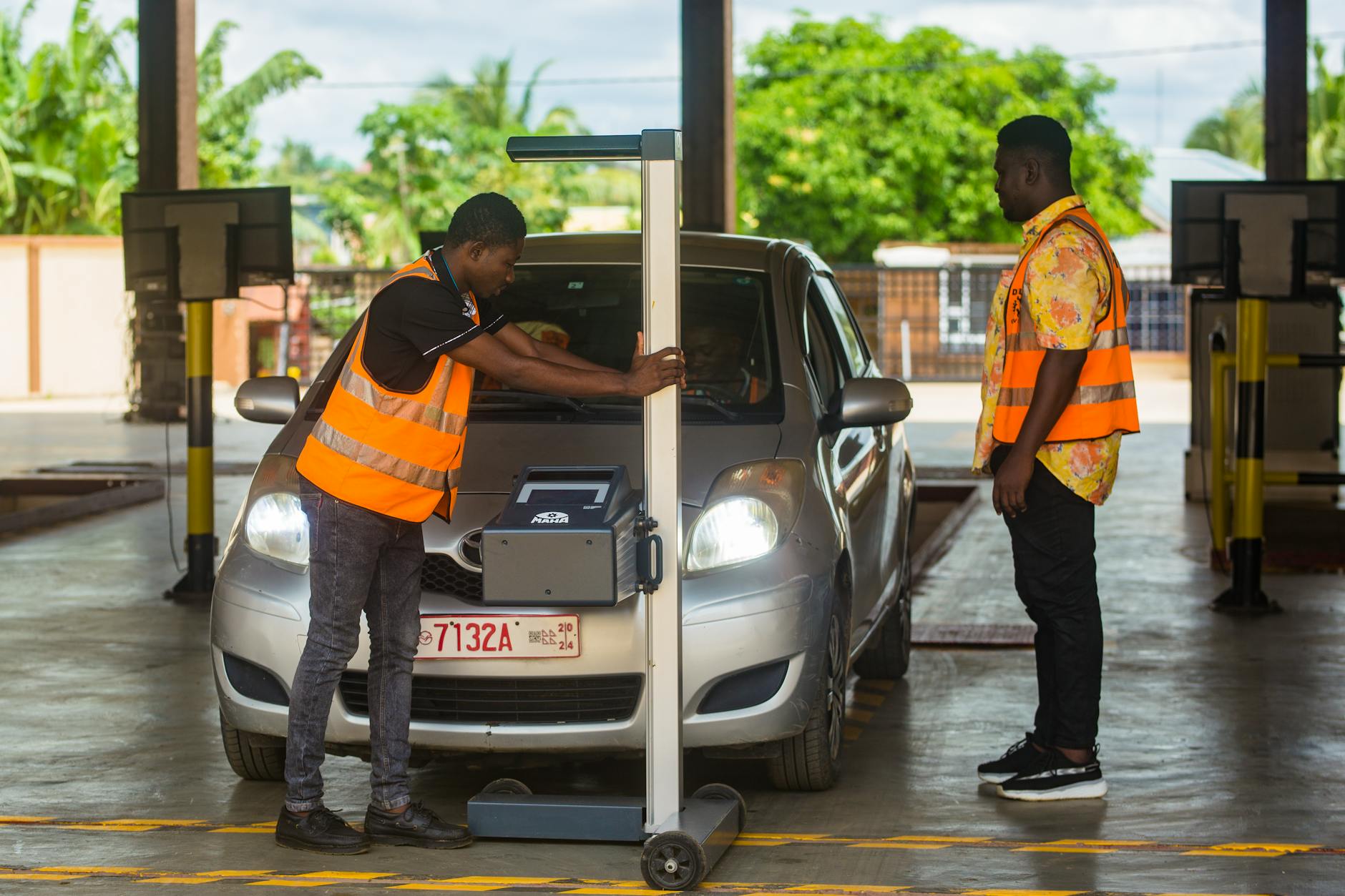
A government labour inspector is an official employed by the Department of Employment and Labour whose job is to ensure that workplaces comply with South African labour law. Their mandate is wide — covering everything from wages and working hours to health and safety conditions and employment documentation.
On a typical day, a labour inspector might:
- Conduct announced or unannounced visits to workplaces across their assigned district
- Audit payroll records to verify compliance with the National Minimum Wage Act and Basic Conditions of Employment Act (BCEA)
- Check that all employees have written contracts of employment
- Inspect health and safety conditions under the Occupational Health and Safety Act (OHSA)
- Investigate complaints submitted by workers about underpayment, unfair treatment, or dangerous conditions
- Issue compliance orders and serve notices on employers who are in breach
- Prepare case files for referral to the Labour Court where employers refuse to comply
- Engage with both employers and workers to educate them about their rights and responsibilities
Inspectors work across every sector — retail, manufacturing, domestic work, construction, hospitality, call centres, and healthcare. They are empowered under the BCEA to enter any workplace, examine records, question employees privately, and take samples or photographs as evidence.
Can a Labour Inspector Enter a Business Without Warning?
Yes. Under Section 65(1) of the Basic Conditions of Employment Act, a labour inspector may, without warrant or prior notice, enter any workplace at any reasonable time. Employers are legally obligated to cooperate, provide access to all employment records, and allow private interviews with employees. Obstructing or misleading a labour inspector is a criminal offence.
Government Labour Inspector Salary: What Does the Job Pay?
Government employment in South Africa is governed by the Department of Public Service and Administration (DPSA) salary scales. Based on 2025/26 DPSA Circular 7 of 2025 (which implemented a 5.5% increase effective 1 April 2025), labour inspectors at the Department of Employment and Labour earn the following total remuneration packages:
| Grade / Salary Level | Annual Package (2025/26) | Monthly (approx.) | Typical Profile |
|---|---|---|---|
| Inspector (Level 7–8) | ~R370,000 – R430,000 | ~R30,800 – R35,800 | Entry to mid-level, 0–3 years experience, relevant diploma |
| Senior Inspector (Level 9–10) | ~R430,000 – R560,000 | ~R35,800 – R46,700 | 3–6 years experience, competency assessment passed |
| Principal Inspector (Level 11–12) | ~R560,000 – R720,000 | ~R46,700 – R60,000 | 6+ years, supervisory responsibility |
| Chief Inspector / Director (Level 13+) | R800,000 – R1,400,000+ | R66,700 – R116,700+ | Management, strategic oversight, MMS/SMS |
All figures are total cost-to-employer packages for 2025/26 and include basic salary, housing allowance, medical aid subsidy, GEPF pension contributions, and applicable notch progressions. Source: DPSA Circular 7 of 2025. Actual packages vary by post, bargaining unit, and individual history.
Beyond salary, government employment comes with significant non-monetary benefits: the Government Employees Pension Fund (GEPF), a medical aid contribution subsidy, 22 days' annual leave as a minimum, and long-term job security with a defined career progression path.
ShiftMate — Compliant Hiring Made Simple
Looking for work?
Get matched to jobs near you.
Create your free profile in 5 minutes.
We'll WhatsApp you when a verified job matches.
How to Become a Government Labour Inspector in South Africa
Becoming a government labour inspector is a structured process. Here is what you need to know:
Minimum Qualifications
- Matric (Grade 12) is the absolute minimum for entry-level administrative support roles within the inspectorate.
- A National Diploma or Bachelor's Degree in Labour Relations, Human Resource Management, Law (LLB), Industrial Psychology, or a related field is required for inspector posts.
- Some posts accept an equivalent NQF Level 6 qualification from a QCTO or SETA-accredited institution in lieu of a formal degree.
- Knowledge of the BCEA, LRA, OHSA, Employment Equity Act, and National Minimum Wage Act is tested during selection.
Additional Requirements
- A valid South African driver's licence (Code B or higher) — inspectors travel extensively within their districts
- South African citizenship
- A clear criminal record
- Communication ability in at least one African language in addition to English is an advantage in most provinces
Step-by-Step: How to Apply for Government Inspector Jobs
Application Checklist for Government Inspector Posts
- ✓ Visit www.labour.gov.za and check the Vacancies section — new posts are gazetted regularly
- ✓ Register on the DPSA e-Recruitment portal at www.dpsa.gov.za for automatic notifications when DEL posts open
- ✓ Prepare a Z83 form — the official government application form, downloadable free from the DPSA website
- ✓ Attach a comprehensive CV with contactable references
- ✓ Include certified copies of your qualifications and ID (certifications required within 3 months for most departments)
- ✓ Write a targeted cover letter addressing each specified competency in the job advertisement
- ✓ Submit before the closing date — late applications are never considered in the public service
- ✓ Prepare for a competency-based interview covering knowledge of BCEA, LRA, and OHSA if shortlisted
Important: Government departments do not charge application fees. If anyone asks you to pay to apply for a government job, it is a scam. Report it to the DPSA or SAPS immediately.
Government Grants and Bursaries to Help You Qualify
If you don't yet have the qualifications needed to become a labour inspector, government-funded pathways can help you get there without carrying full tuition fees yourself.
PSETA Bursaries (Public Service Sector Education and Training Authority)
The most relevant SETA for anyone aspiring to work in a national government department like the DEL is PSETA — the Public Service Sector Education and Training Authority. PSETA funds bursaries, learnerships, and skills programmes specifically for current and aspiring national and provincial government employees. Key offerings include:
- Bursaries for NQF Level 6 and 7 qualifications in Public Administration, HR Management, and Labour Relations
- Learnerships that allow you to earn a stipend while completing your qualification at a PSETA-accredited provider
- PSETA bursary applications typically open between January and March each year — check pseta.org.za
HWSETA (Health and Welfare SETA)
For those specifically pursuing an Occupational Health and Safety (OHS) inspector route, HWSETA funds qualifications in occupational health, safety, and wellness. OHS inspectors are a specialist category within the DEL inspectorate and are in high demand given South Africa's expanding mining, construction, and manufacturing sectors.
NSFAS (National Student Financial Aid Scheme)
NSFAS covers tuition, accommodation, and living costs for qualifying students at public universities and TVET colleges pursuing degrees and diplomas in fields relevant to a labour inspector career. If you meet the household income threshold, this is the most comprehensive funding route available for school leavers.
YES Programme (Youth Employment Service)
The Youth Employment Service (YES) Programme is a government-backed initiative placing young South Africans aged 18–35 in paid, 12-month work experiences. The Department of Employment and Labour itself participates in the YES programme — giving aspirant inspectors a direct foot in the door of the department while earning a stipend and building the experience needed for permanent appointment.
Government Internships at the DEL
The Department of Employment and Labour runs a structured internship programme for graduates. These 12–24 month placements are specifically designed to give graduates practical experience in labour law enforcement, HR compliance, and workplace inspections — the core competencies required for a full inspector post. Check the DEL website vacancies section for internship advertisements, which typically open in the fourth quarter of each year.
What the 10,000 New Inspectors Mean for Employers
If you run a business in South Africa, the expansion of the inspectorate is the most significant labour law development of the decade. The probability that your business will be inspected in 2026 or 2027 is dramatically higher than it was just two years ago.
The inspection focus areas most likely to affect day-to-day operations:
- National Minimum Wage compliance — the NMW for 2026 is R30.23 per hour (effective 1 March 2026, up from R28.79 in 2025). Underpayment is one of the most common and most penalised violations.
- Written employment contracts — every employee must have a written contract. Verbal agreements do not satisfy the BCEA.
- Payslips — must be issued on every payday and include specific itemised information under the BCEA.
- Working hours and overtime — ordinary hours, overtime rates, and rest periods are tightly regulated under Sections 9–17 of the BCEA.
- UIF registration — all employers must register and deduct contributions. Failure to register is a criminal offence.
- Health and safety — workplace conditions must comply with the Occupational Health and Safety Act.
The Compliance Impact: Workers vs Employers vs Non-Compliant Businesses
| Dimension | Workers | Ethical Employers | Non-Compliant Businesses |
|---|---|---|---|
| NMW Enforcement (R30.23/hr from March 2026) | Guaranteed minimum pay and back-pay orders for violations | Already compliant — no disruption | Fines, back-pay orders to all affected employees, potential criminal charges |
| Inspection Frequency | More frequent checks = stronger protection of rights | Low risk — documentation in order | Very high risk — likely compliance orders or Labour Court referral |
| Competitive Position | More jobs available in compliant workplaces | Level playing field — non-compliant undercutting ends | Cost advantage disappears; risk of forced closure and reputational damage |
| Contract Compliance | Right to written contracts enforced | Already compliant — no action needed | Must formalise all employment relationships immediately |
| What to Do Now | Know your rights — register free on ShiftMate to access compliant employers | Review and audit HR documentation now to be inspection-ready | Consult a labour attorney immediately and begin remediation |
How ShiftMate Helps South Africa Hire at Scale — Compliantly
ShiftMate Insight
Our experience placing frontline workers across South Africa consistently shows that most compliance failures are not deliberate — they're the result of small businesses using informal agreements inherited from previous owners, or growing faster than their HR processes kept pace with. The arrival of more inspectors is not just a threat; it's an accelerant. Businesses that invest in compliant hiring infrastructure now will still be operating profitably when others are facing Labour Court orders.
At ShiftMate, we've spent years building a model that connects South African job seekers with employers — quickly, compliantly, and at a fraction of traditional recruitment costs.
- Introducer Program: On-the-ground onboarders reaching talent in townships and rural communities traditional agencies miss. We onboard over 10,000 people to the platform every single week.
- Digital Profiles: Workers build verified digital CVs that capture skills, assessments, availability, and location — far beyond a paper CV.
- SETA-Aligned Work Readiness: Free assessments benchmark candidates' readiness for their target sector. Assessed candidates get hired measurably faster.
- Trial-to-Hire Model: A flat R500/month per person during a working interview period, and a flat R1,500 placement fee on permanent hire. No 15–20% agency fees. Fully BCEA-compliant contracts included.
- Compliance-First Infrastructure: Every ShiftMate placement includes a compliant written contract, correct payslip documentation, and an audit trail — exactly what a labour inspector expects to see.
For job seekers: browse current opportunities on ShiftMate and register free in under three minutes.
For employers: post a job on ShiftMate and let us handle the sourcing, screening, and compliant contracting.
The Enforcement Gap: How Bad Was It Before?
With approximately 2,300 labour inspectors covering a country with millions of formal and informal employers, the Department of Employment and Labour was operating at a fraction of the coverage needed for meaningful enforcement. Inspectors were stretched across vast geographic areas, with no realistic ability to proactively identify violations.
The result: a significant proportion of South African workers were paid below the National Minimum Wage, worked without written contracts, or faced unsafe conditions — with limited practical recourse. For ethical employers who paid correctly and complied fully, the enforcement gap created an unfair competitive disadvantage. The R10 billion investment is, at its core, a commitment to ending that dynamic.
Frequently Asked Questions
How much do government labour inspectors get paid in South Africa?
Government labour inspectors in South Africa earn approximately R370,000 to R720,000 per year depending on their salary level, based on the 2025/26 DPSA salary scales (Circular 7 of 2025). Entry-level inspectors at Salary Level 7–8 earn approximately R370,000–R430,000 per year as a total cost-to-employer package. Senior and principal inspectors at Levels 9–12 earn R430,000–R720,000. Chief inspectors and directors at Level 13 and above earn R800,000 to over R1.4 million. All packages include GEPF pension contributions, medical aid subsidies, and housing allowances.
What do government labour inspectors do in South Africa?
Government labour inspectors in South Africa enforce compliance with labour legislation at workplaces. Their duties include conducting announced and unannounced workplace visits, auditing payroll records for National Minimum Wage compliance (R30.23/hour from March 2026), verifying written employment contracts, checking health and safety conditions under the OHSA, investigating worker complaints, and issuing compliance orders to non-compliant employers. They operate under powers granted by Sections 63–69 of the BCEA.
How do I become a government inspector in South Africa?
To become a government labour inspector in South Africa, you need a Matric (Grade 12) plus a National Diploma or Bachelor's Degree in Labour Relations, Human Resource Management, Law, or Industrial Psychology. A valid driver's licence and South African citizenship are also required. Apply via the DPSA e-Recruitment portal (dpsa.gov.za) or directly through the Department of Employment and Labour's vacancies page (labour.gov.za) using the official Z83 application form. Vacancies are published in government vacancy circulars and the Government Gazette.
What is the R10 billion government labour inspector plan?
The R10 billion plan is a commitment by South Africa's Department of Employment and Labour, announced by Minister Nomakhosazana Meth, to hire 10,000 additional labour inspectors over three years. The department currently employs approximately 2,300 inspectors. This investment will more than quadruple the inspectorate and increase annual workplace inspections from roughly 2% of businesses to over 1.6 million visits nationally, closing South Africa's longstanding enforcement gap in labour law compliance.
Can a government labour inspector enter my business without notice?
Yes. Under Section 65(1) of the Basic Conditions of Employment Act (BCEA), a government labour inspector may, without warrant or prior notice, enter any workplace at any reasonable time. Employers must cooperate fully, provide access to all employment records, and allow private interviews with employees. Obstructing or misleading a labour inspector is a criminal offence in South Africa.
What happens if a business fails a government labour inspection?
If a business fails a labour inspection in South Africa, the inspector issues a compliance order specifying what must be corrected and by when. If the employer does not comply, the matter is referred to the Labour Court. Penalties include fines, orders to pay back-pay owed to all affected employees, and in serious cases criminal charges. Repeat non-compliance or willful violations of the National Minimum Wage Act carry the most severe consequences, including possible imprisonment of directors or managers responsible.
Are there government grants or bursaries to help me qualify as a labour inspector?
Yes. The PSETA (Public Service Sector Education and Training Authority) funds bursaries and learnerships specifically for aspirant national government employees, including those targeting the Department of Employment and Labour. HWSETA funds qualifications for OHS inspector routes. NSFAS covers tuition and living costs for qualifying students at public universities and TVET colleges. The YES Programme places young South Africans aged 18–35 in 12-month paid internships at government departments, including the DEL, providing a direct pathway into permanent inspector posts.
What is the National Minimum Wage in South Africa in 2026?
The National Minimum Wage (NMW) in South Africa for 2026 is R30.23 per hour, effective 1 March 2026 (up from R28.79 in 2025, a 5% increase). This rate now applies equally to general workers, farm workers, and domestic workers. The NMW is enforced by the Department of Employment and Labour and is one of the primary focus areas for labour inspectors. Failure to pay at least the NMW results in compliance orders, back-pay obligations, and fines.
Ready to take action?
Find Call Centre & BPO Jobs Near You — Free
Thousands of verified SA employers are hiring right now. Register free in minutes — no CV required to get started.
Find Open Jobs →